

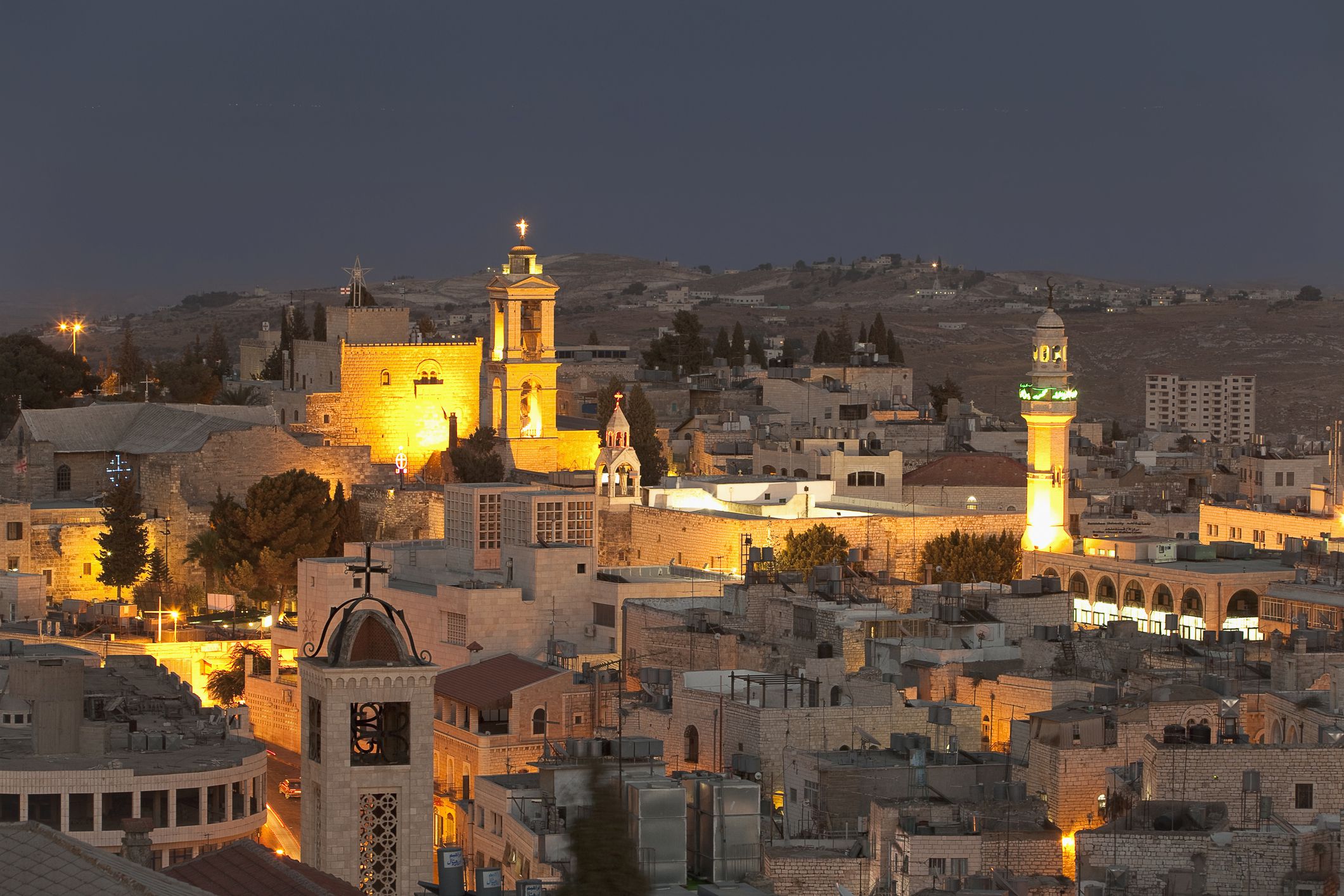
Bethlehem Today: Holy City Under Pressure
Bethlehem is a historic Palestinian city in the central West Bank, celebrated by Christians as the traditional birthplace of Jesus and home to the Church of the Nativity and Manger Square, key sites in global Christian pilgrimage.
In recent years, the Israel–Hamas war and intensified military activity across the occupied West Bank have profoundly disrupted life in Bethlehem, sharply reducing visitor numbers and forcing officials to curtail or cancel large public Christmas events.
Return of Christmas Celebrations
After two years of subdued or largely symbolic Christmas observances, Bethlehem’s leaders have restored a full public celebration, including the lighting of a large Christmas tree in Manger Square, parades of scout marching bands, and preparations for Midnight Mass at the Church of the Nativity.
Local residents describe the renewed festivities as a deliberate effort to “reignite the spirit of Christmas” and send a message of hope, even though the crowds are still dominated by local Palestinians and only a small number of international pilgrims have returned so far.
Tourism, Economy, and Fragile Recovery
Bethlehem’s economy relies heavily on tourism, with an estimated 80% of residents depending on visitors for employment in hotels, restaurants, guiding, transport, and handicraft production, making the war-related collapse in tourism particularly damaging.
As a ceasefire around Gaza holds and tensions stabilize slightly, domestic tourism from other West Bank cities is slowly reviving, bringing some income back to local businesses and raising hopes that international pilgrims will eventually return in greater numbers to support a lasting recovery.
Spiritual Symbolism and Hopes for the Future
As the town associated with the birth of Jesus, Bethlehem carries immense symbolic weight for Christians worldwide, and its Christmas celebrations are often seen as an annual barometer of peace and stability in the Holy Land.
This year, local church and civic leaders have framed the renewed celebrations as both a spiritual testimony and a call for a just peace, emphasizing that the city’s message of light, hope, and shared humanity remains relevant amid ongoing political uncertainty and social hardship.