History and Legacy
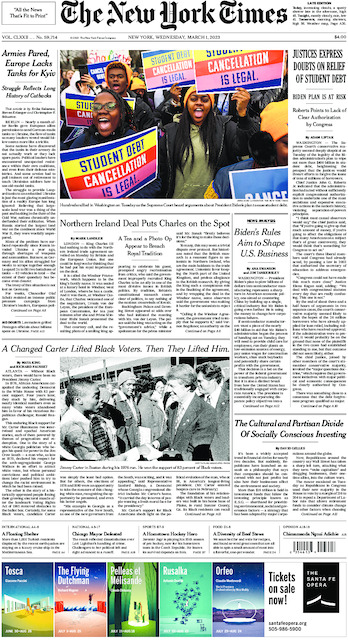
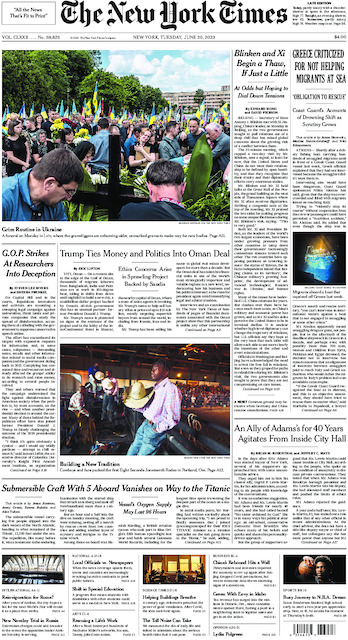
The New York Times began as a penny paper under Henry Jarvis Raymond and George Jones, evolving into a powerhouse of journalism. Key milestones include its coverage of the Pentagon Papers in 1971 and the Watergate scandal, cementing its reputation for accountability.
Today, it publishes daily in print and online, with sections like The Morning newsletter reaching 10 million subscribers. Its influence extends to podcasts, books, and films, adapting to modern media consumption.
Despite criticisms over bias, the NYT upholds editorial standards, employing thousands of journalists worldwide.
Today's Top Stories (Dec 23, 2025)
Front-page coverage highlights intensifying U.S.-China trade talks, with potential tariffs looming post-holidays. Economists warn of inflationary pressures, analyzed in depth by NYT business reporters.
Weather alerts dominate U.S. news, as blizzards strand thousands at airports. The paper's live updates track impacts on supply chains and family reunions, featuring personal stories from affected readers.
In tech, an exclusive reveals OpenAI's new safety protocols amid regulatory scrutiny. Global implications for AI ethics are explored, drawing expert commentary.
Digital Transformation and Impact
The NYT's shift to digital has revolutionized news delivery, with apps and newsletters driving engagement. Features like Wordle, acquired in 2022, boost daily interactions.
Subscription models fund investigative work, including series on climate change and inequality. On December 23, interactive maps visualize storm paths and economic forecasts.
Globally, the NYT influences policy and culture, with its reporting cited in debates worldwide. Challenges like misinformation persist, but its commitment to truth endures.