

Who Is Osman (Sharif Osman) Hadi?
Osman Hadi, widely referred to in media as Sharif Osman Hadi, was a prominent Bangladeshi student leader associated with the July Uprising and the Inquilab Mancha, a platform that positioned itself as a revolutionary youth movement challenging the political status quo. Reports describe him as a vocal critic of the existing power structure and of India’s perceived influence over Bangladesh’s internal affairs.
Hadi first drew broad national attention through campus-based mobilizations and his fiery speeches, which resonated with sections of disillusioned youth but also alarmed opponents who saw him as a radical agitator. His growing profile made him both a symbol of resistance for his supporters and a polarizing figure in Bangladesh’s already tense political landscape.
Assassination Attempt and Death in Singapore
According to detailed news coverage, Hadi was shot in Dhaka in what authorities and media have consistently described as an assassination attempt targeting the student leader. He was subsequently flown to Singapore for advanced medical treatment after sustaining critical injuries, highlighting both the severity of the attack and the political sensitivity surrounding his case.
Despite several days of intensive care, Hadi succumbed to his injuries in the Singapore hospital, and officials in Dhaka publicly confirmed his death. The announcement immediately transformed him from a controversial activist into a potent symbol for protesters, with his killing widely framed by supporters as a politically motivated act meant to silence dissent rather than an isolated crime.
Unrest, Anti-India Protests, and Political Fallout
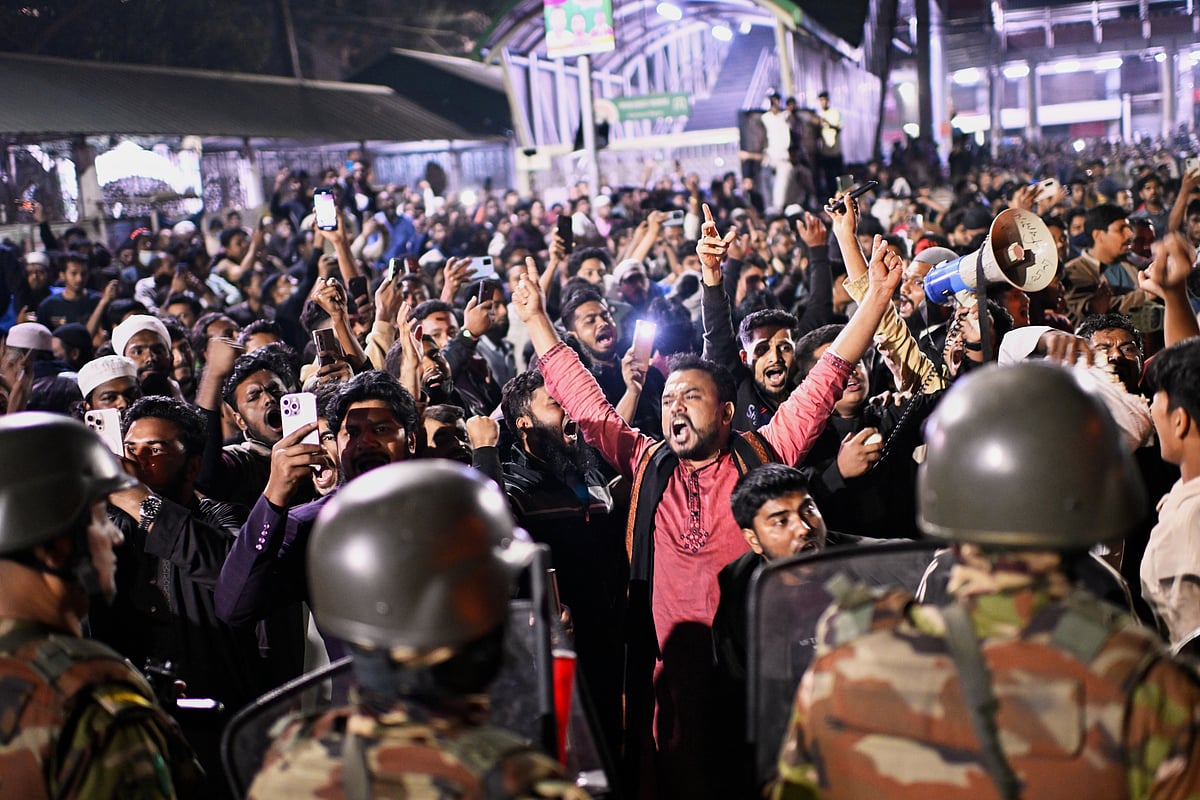
News reports describe how the confirmation of Hadi’s death sparked large-scale demonstrations across Bangladesh, particularly in Dhaka, where students and citizens gathered in central intersections and university areas to mourn and protest. The rallies quickly escalated into violent clashes, with several buildings, including offices of major newspapers, reportedly attacked or set ablaze as anger spilled over into direct confrontation with state institutions.
Hadi’s strong anti-India stance has made his killing especially sensitive, with several outlets reporting that his death has intensified anti-India slogans and protests, and has amplified suspicions about foreign interference among his followers. Analysts caution that the longer authorities take to credibly investigate and prosecute those behind the assassination attempt, the more likely it is that Hadi’s legacy will fuel prolonged instability and deepen both domestic and regional tensions.
Looking ahead, the political fallout from Hadi’s death is likely to shape Bangladesh’s student politics and broader opposition movements, as his image is adopted in slogans, posters, and social media campaigns. Whether this moment leads to substantive reforms or merely entrenches existing divides will depend largely on how the government, security forces, and regional powers respond to the grievances that Hadi’s supporters now see as inseparable from his life and death.