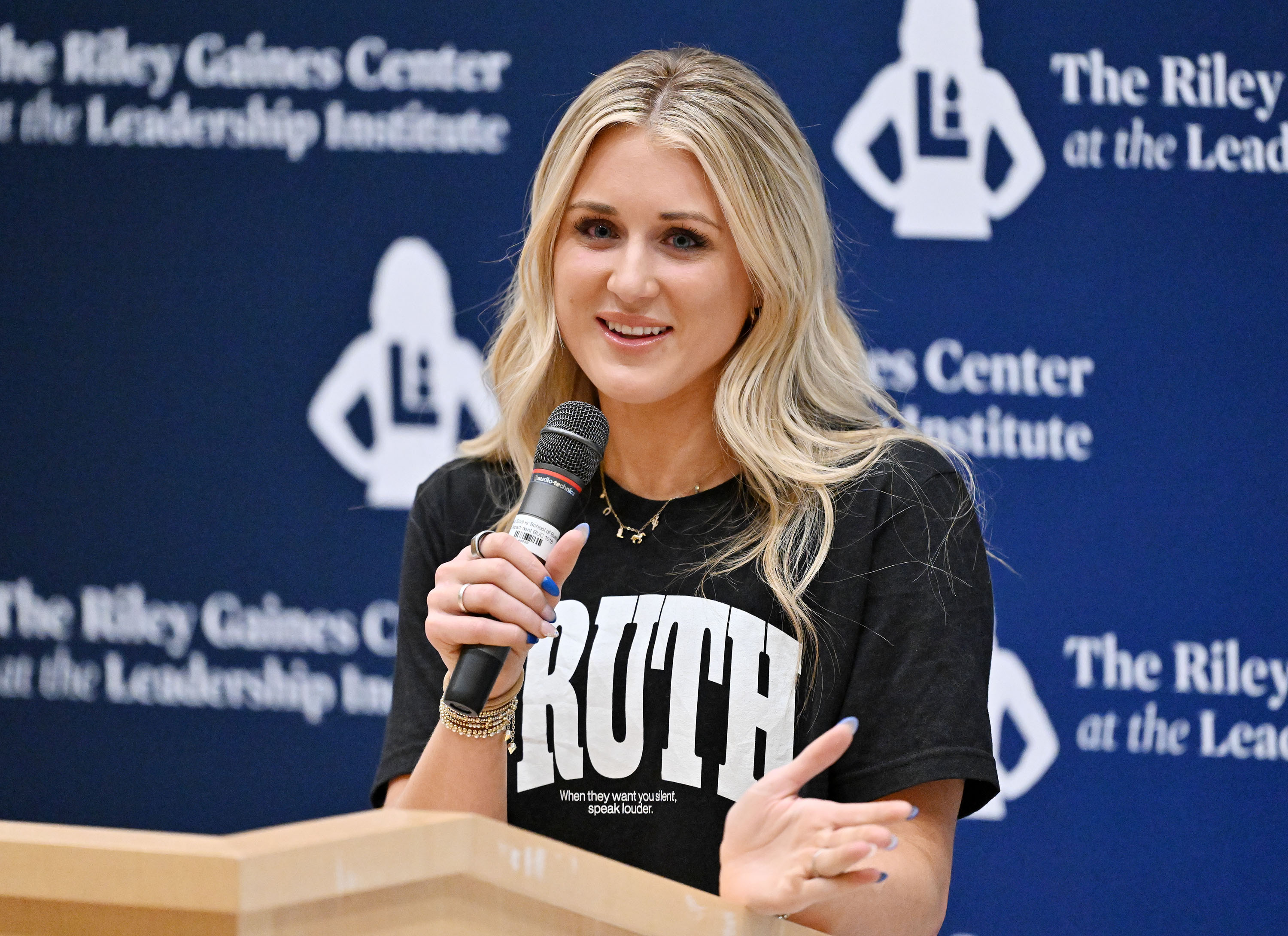
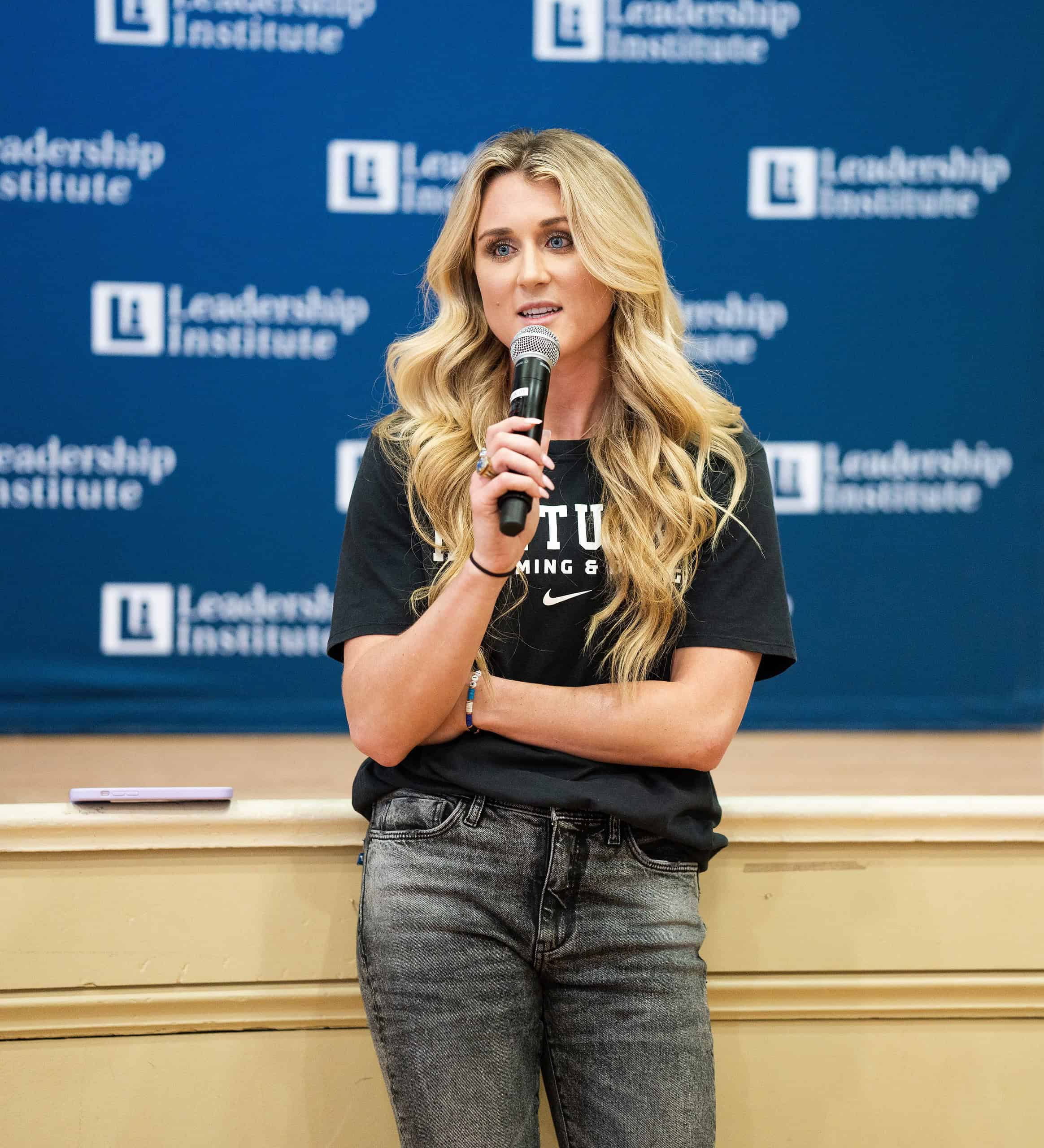
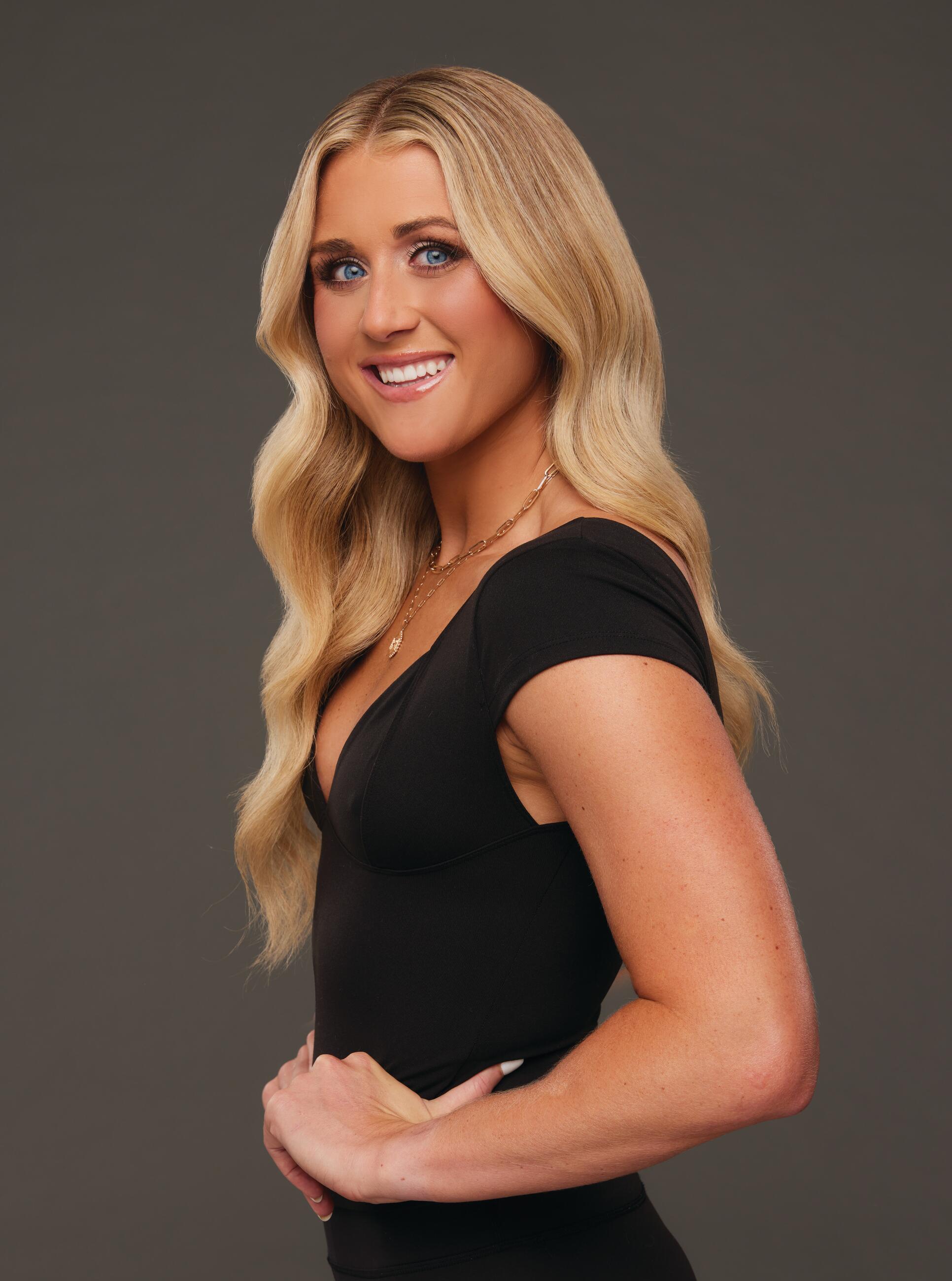
Who Is Riley Gaines?
Riley Gaines is a former standout swimmer at the University of Kentucky, where she became one of the program’s most decorated athletes with multiple SEC titles and All-America honors.[4] After graduating, she transitioned from competitive swimming to full-time activism, focusing on what she frames as the defense of women’s sports and sex-based protections.[4][5]
Her national profile emerged after she tied transgender swimmer Lia Thomas in a race at the 2022 NCAA women’s championships, an event she has described as a moment of "humiliation" that convinced her to speak out.[2][5] Gaines now presents herself as an advocate for female athletes who feel pressured to accept policies that allow transgender women to compete in women’s categories and share locker rooms, arguing that these rules are unjust and unsafe.[3][5]
From Champion Swimmer to Conservative Activist
Following the NCAA controversy, Gaines began working with conservative policy groups and women’s organizations that oppose trans inclusion in female sports divisions.[2][5] These groups helped her translate her personal experience into broader political messaging, positioning her as a spokeswoman in legislative hearings, media campaigns, and campus speaking tours.[2]
Gaines has since testified for bills restricting transgender girls’ participation in school sports across numerous U.S. states and appeared in advertisements for Republican candidates who support such legislation.[2][5] She has also taken leadership roles such as vice chair of an "America First" athletes coalition and launched the Riley Gaines Center, which offers mentoring and training to parents, coaches, and athletes who want to organize against current gender policies.[3][5]
Controversy, Backlash, and Cultural Impact
Supporters describe Gaines as a defender of Title IX and women’s equality in sports, crediting her with helping to spur a wave of state-level laws that reserve women’s sports categories for athletes designated female at birth.[1][2][5] They argue that her testimony and public speaking give voice to concerns many female athletes feel unable to express, and that her activism is preserving opportunities and safety for future generations.[1][3]
Opponents, including LGBTQ+ advocates and many journalists, portray Gaines as a central figure in a coordinated anti-trans campaign that uses sports as a gateway to restrict broader transgender rights.[2] Investigations note that she frequently highlights individual trans athletes to millions of followers and frames the conflict as "spiritual warfare," behavior critics say encourages stigma and harassment.[2] This has made her a polarizing figure: celebrated in conservative media, condemned in queer and progressive circles, and increasingly influential in shaping public and policy debates over gender, fairness, and inclusion in sport.[2][3]