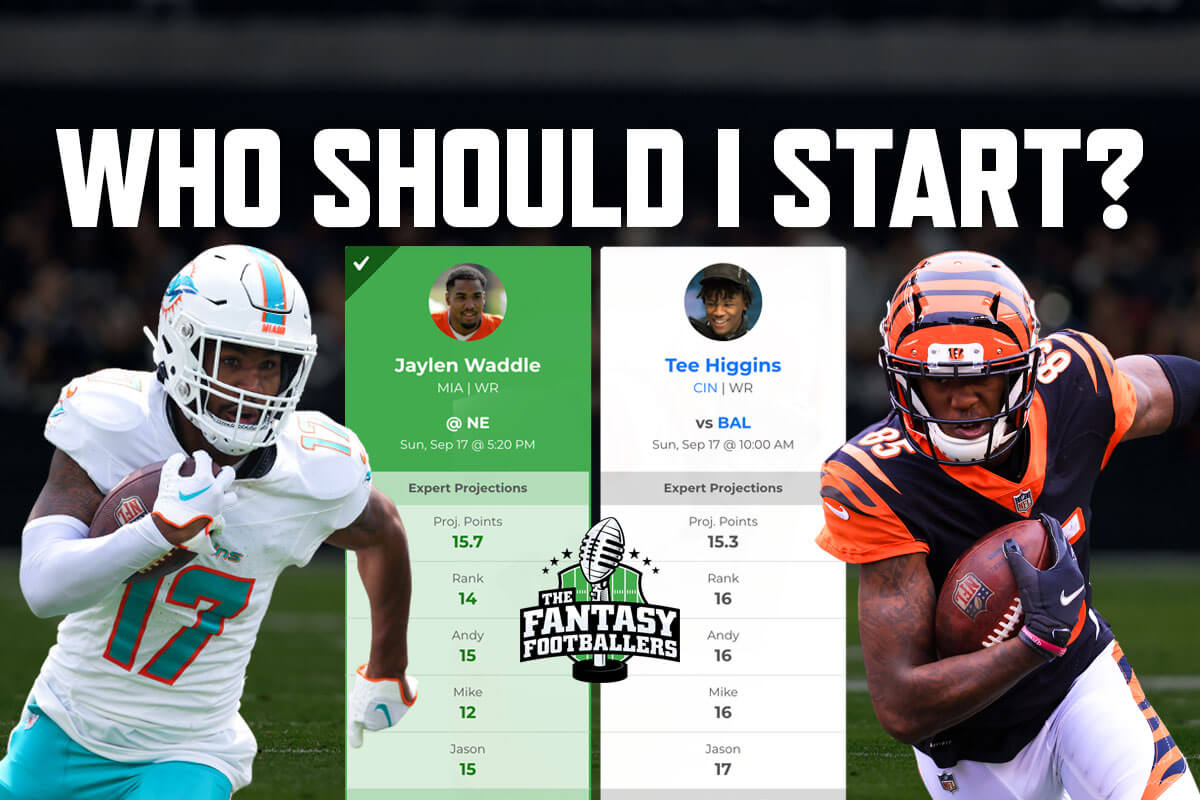

What does “who should I start” mean in fantasy football?
“Who should I start” is the phrase fantasy managers use when choosing which players to put in their weekly starting lineup, usually when deciding between two or more options at the same position. It centers on weighing projected points, matchup quality, injury status, and scoring format to optimize every roster spot.
As fantasy football has grown more competitive, especially in paid and high-stakes leagues, this once simple question has become more technical. Managers now rely on expert rankings, matchup breakdowns, and live news updates to answer it, particularly in critical playoff weeks when a single bad choice can end a season.
How experts answer “who should I start” each week
Start/sit articles and cheat sheets assign weekly ratings to players, indicating how strongly analysts recommend starting them based on matchup and expected usage. These guides often break down each game on the schedule, flagging players with strong start grades and warning against risky options in tough spots.
Analysts also highlight specific recommended starters and sits, focusing on trends like target share, snap rate, red zone usage, and how opposing defenses perform against each position. They regularly identify sleepers and streaming options who can fill gaps created by injuries or bye weeks, turning borderline players into viable fantasy starters in the right matchup.
Making better start/sit decisions today
To answer “who should I start” well, modern fantasy managers combine expert projections, matchup data, and their own league context. That means checking updated rankings close to kickoff, reviewing how defenses have fared against similar players, and adjusting for format differences such as PPR, half-PPR, or standard scoring.
Late-season and playoff decisions often prioritize upside, so managers look for players in high-scoring game environments or facing vulnerable defenses while still considering floor and risk tolerance. By following current start/sit tools, monitoring news, and applying consistent decision rules, managers can reduce guesswork and make more confident lineup calls each week.